
The Indigo Files
From simple symbols of operational excellence to a cautionary tale of hubris, IndiGo's journey mirrors the patterns we see in other failed giants. This article explores how a disciplined, innovative airline became overconfident in its own mythology—and what the FDTL crisis reveals about systems optimization gone wrong. Discover why trust, once shattered, cannot be rebuilt with apologies alone, and what IndiGo's recovery will truly demand.
BUSINESS
Shrey Padhi
12/15/2025
The set-up
Indigo has been in the limelight for the entire year now. One of the many reasons Indigo started making big headlines at the start of the year was for the right reasons -- riding the wave of registering profits: first profit registered in the 3rd year of operations and they have since never looked back. Just this year they placed an order of additional 30 aircrafts from Airbus to fuel their vision 2030. In standard "got rich young" story often seen in Bollywood films, Indigo started flirting with unprecedented plans of expansion across Europe and beyond. There have been many goliaths that have tried touching that kind of holy grail. Many from India have tried relentlessly to realize that dream of being called the king of the skies. But the numerous failures of doing so have in spectacular fashion dubbed India as the "graveyard of airlines". But Indigo was doing things differently. They were becoming alarmingly good at their operations. Their staff was good, the brand was earning trust, the leadership was turning heads and demanding respect, not as a smug-like condescending high school bully; but through persistence and patience. Like a scientist who wakes up early in the morning, and heads straight to their lab to keep working on perfecting that formula, which they have deemed will change the course of the world -- that their imminent breakthrough will eventually warrant a Nobel prize.
But something changed. Cracks opened up when the meticulous scientist starting turning bitter. Maybe some of the formulae stopped working. Or the persistence that was so successful transformed to rigid and unimpressionable frameworks that had no real clear path to anywhere but a dead end. So, what happened? How did Indigo go from being a strategic masterclass to an airline which is now losing the trust of customers faster than the self-respect of an intoxicated deranged ex-lover tussling to make that call to mend things and work on their toxic relationship?
The History
IndiGo was founded in 2006 by Rahul Bhatia, an electrical engineer from the University of Waterloo, and Rakesh Gangwal, a veteran of the global aviation industry (formerly CEO of US Airways). Their partnership was a study in contrasts: Bhatia, operating under InterGlobe Enterprises, was the execution master who kept a deliberately low profile in a world of flashy, media-trained CEOs; Gangwal was the strategic architect who understood the brutal math of global aviation.
While competitors were busy launching airlines with glitzy launch parties, Kingfisher calendars, and promises of "five-star flying," IndiGo started with a boring but lethal secret weapon: The 2005 Paris Air Show Order. Before they had even flown a single passenger or hired a cabin crew, they stunned the industry by ordering 100 Airbus A320s. It was a massive, unprecedented bet that signaled they weren't just testing the waters—they were planning to own the ocean.
Operating under InterGlobe Aviation, they launched in August 2006 with a simple promise: affordable, on-time, no-frills air travel.
The SLB Genius
IndiGo's genius wasn't just in flying planes; it was in how they bought them. They perfected the Sale and Leaseback (SLB) model. By ordering in bulk (like the 100-plane order in 2005 and the record-breaking 250-plane order later), they negotiated massive discounts from Airbus—estimated at 40-50% off list price.
Here's how the arbitrage worked: Before IndiGo took delivery of a plane, a leasing company like BOC Aviation would step in. They'd pay Airbus the discounted price IndiGo negotiated, and IndiGo would pocket the difference—the gap between the discounted purchase price and the market value. IndiGo made millions of dollars just for taking delivery of planes. They were aircraft traders who happened to fly planes.
But there's more. IndiGo returned the planes every six years, right before the massive "D-check" maintenance bill would hit. New planes meant fuel efficiency, warranty coverage, and a cost base that never ballooned. While competitors were flying 15-year-old planes hemorrhaging on maintenance, IndiGo always operated the newest, most efficient aircraft on the market.
This wasn't just clever finance. It was survival engineering. While Kingfisher borrowed money to buy planes that depreciated, IndiGo generated cash from fleet expansion. This disciplined aggression allowed them to scale at a pace that broke competitors. By 2012, just six years after launch, they had already toppled Jet Airways to become India's market leader by market share.
2015: They went public with a blockbuster IPO, valuing the company at over $4 billion, making their founders billionaires and proving that "budget" didn't mean "low value".
The "6E" Culture: They built a brand code, "6E" (a play on their license code), which became synonymous with "IndiGo Standard Time"—a relentless, almost military obsession with punctuality that shamed full-service carriers.
However, the partnership that built this empire didn't last. In a bitter public feud that erupted in 2019, Gangwal accused Bhatia's InterGlobe group of questionable Related Party Transactions (RPTs) and governance lapses. It was in this context that Gangwal, writing to the securities regulator (SEBI), famously remarked that even a "paan ki dukaan" (a small betel leaf shop) would have handled matters with more grace than the company's board.
The competing forces
Between 2005 and 2019 the Indian skies were a Red Ocean -- bloody with competition, debt and ego. It resulted in India's aviation history being littered with glamorous failures: Kingfisher and Jet Airways—airlines that grew fast and then collapsed under their own weight. These airlines chased premium positioning, complex fleets, and overexpansion funded by debt, then buckled when fuel prices, currency, and regulation turned against them.
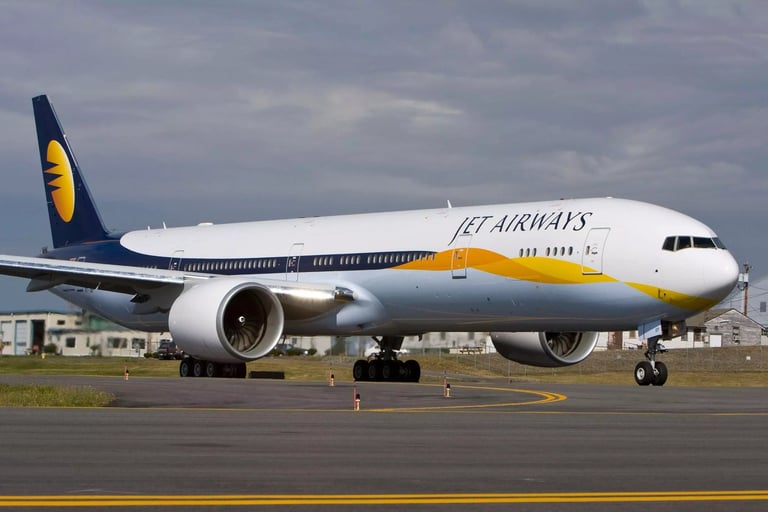
Two major giants defined this era: Kingfisher Airlines (led by the flamboyant Vijay Mallya) and Jet Airways (led by the veteran Naresh Goyal). Both were playing a game of vanity metrics—who had the best food, the most legroom, and the prettiest hostesses.
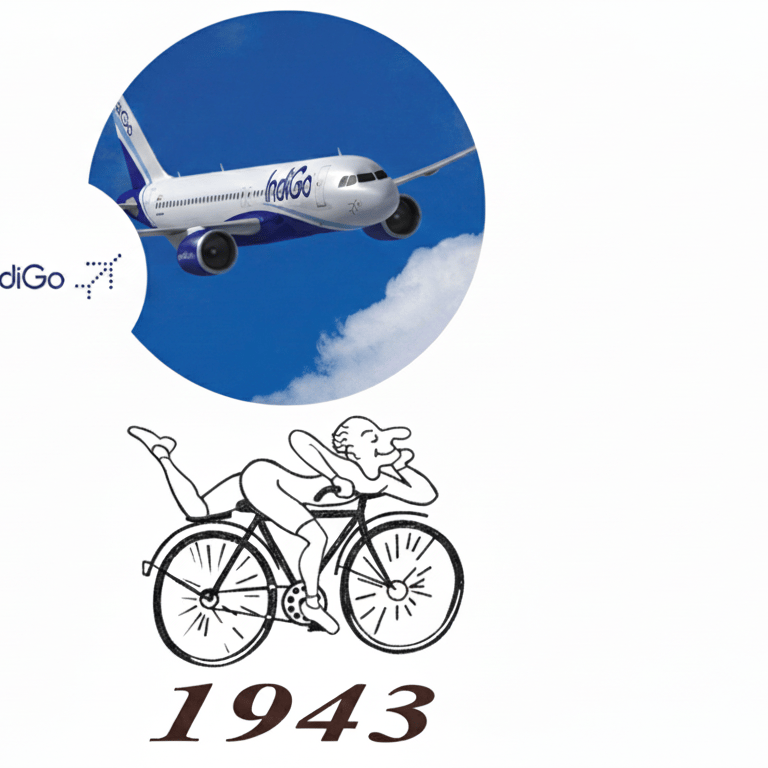


The feud culminated in Gangwal slowly exiting the cockpit. By 2022, he began selling his stake, and by 2024-25, he had walked away with over ₹41,650 Crore, leaving the airline he meticulously built in the hands of Bhatia and a new professional management team. By 2023–24, the "Paan ki dukaan" was anything but—it was a behemoth operating a fleet of 300+ aircraft and over 1,600 daily flights, standing as one of the few profitable airlines in a country famous for bankrupting them.
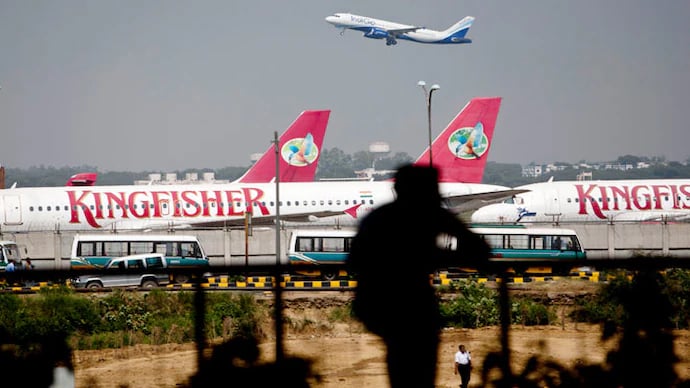
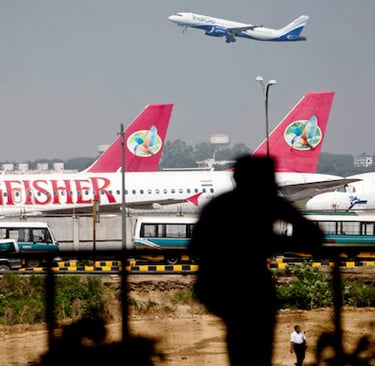
Kingfisher: The Dream That Couldn't Do Math
Kingfisher Airlines is a household name in India. Vijay Mallya, who inherited the United Breweries Group (UB Group) at the age of 28 and transformed it into a global spirits powerhouse, earned his nickname "King of Good Times" from his lavish parties, ownership of a Formula One team (Force India), and the Royal Challengers Bangalore (RCB) cricket team. In 2005, KFA launched as a premium, luxury-focused airline, quickly becoming known for its high-end service.
Vijay Mallya wanted to be the "Richard Branson of India" but forgot the math. He ran a "five-star hotel in the sky" with personal entertainment screens in every seat, gourmet meals, and free amenity kits—all while selling tickets at rock-bottom prices to compete with budget carriers.
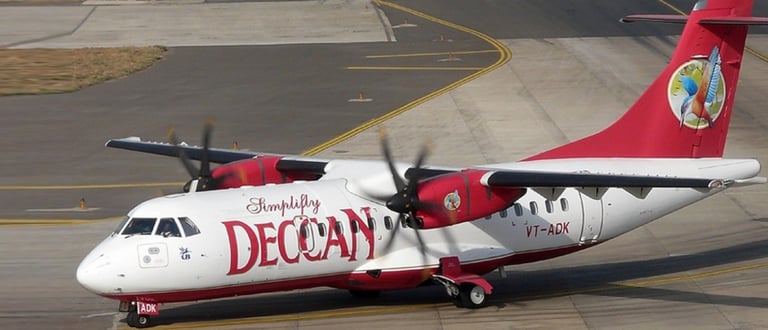
In a rush to unlock international flying rights (which required five years of operations), Mallya acquired Air Deccan in 2007, a scrappy low-cost carrier. He merged them on paper, kept Kingfisher's luxury branding, and created what industry insiders called a "Frankenstein fleet"—incompatible aircraft that couldn't support the same operations. His A320s were luxurious. Air Deccan's ATRs were budget boxes. Pilots couldn't easily transfer between them. Maintenance became a nightmare. Spare parts inventory exploded.
Then came the real killer: the 2008 oil crisis. ATF prices soared from ₹30,000/kl to ₹60,000/kl (with 50-60% taxation). Mallya had built a five-star hotel model that couldn't survive commodity shocks.
By 2011, Kingfisher was bleeding ₹2-3 crore every single month. Pilots weren't getting paid. Aircraft sat on tarmacs, grounded for unpaid maintenance. In March 2012, pilots went on strike—some making in-flight announcements saying "We fly despite not being paid for two months out of sense of duty." By June 2012, lessors started repossessing planes. By December 2012, the DGCA suspended the airline's license. The King of Good Times had become the King of Fled Times—Mallya eventually fled to London as a fugitive.
Jet Airways: The Aristocrat Who Refused to Adapt
If Kingfisher was reckless, Jet Airways was stubborn. For two decades, it was India's only respectable airline—the choice of businesspeople and the wealthy. But somewhere around 2005-2007, the market shifted. Low-cost carriers (LCCs) started eating their lunch.
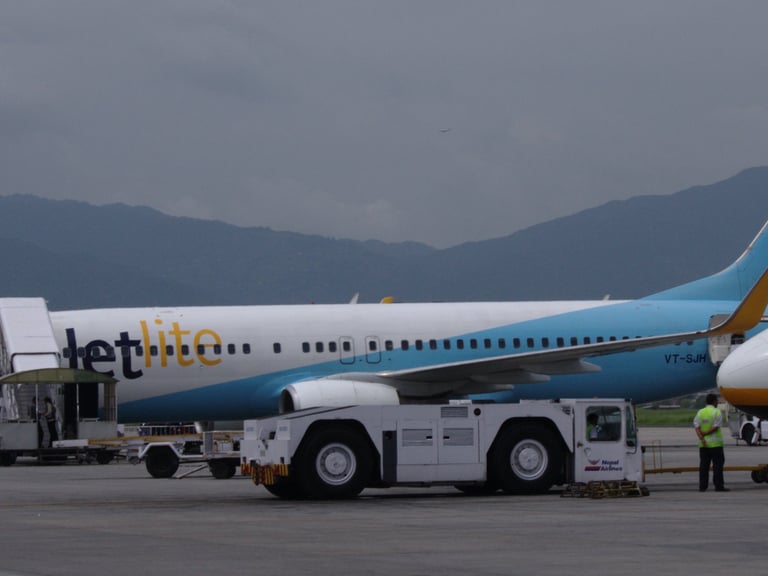
Instead of adapting, Jet Airways tried to be everything at once. They launched JetLite (a budget subsidiary), then Jet Konnect (another budget arm), then mixed full-service flights with budget flights on the same routes. The result? Passengers were confused. Brand dilution. Operational chaos.
The airline was flying wide-body A330s on international routes while using Boeing 737s (narrow-body short-haul planes) to try to compete with Emirates. It was like showing up to a knife fight with a spoon. They couldn't fill the big planes, so they bled cash on prestige routes. And they kept buying more planes anyway. Meanwhile, IndiGo, SpiceJet, and GoAir were pricing at ₹3,000 per ticket, undercutting Jet at every turn. Here was the brutal equation: Jet Airways had a cost base 30-35% higher than low-cost carriers, but was pricing at LCC levels to compete. The math didn't work.
By 2017, the debt was suffocating. By 2018, they couldn't pay lessors. Aircraft started getting repossessed. Planes grounded. Staff salaries unpaid. Employees protesting.
Founder Naresh Goyal stepped down in 2019. On April 17, 2019, Jet Airways' final flight took off from Amritsar to Mumbai at 10:30 PM and landed at 12:22 AM—a fitting midnight death for an airline that never figured out its identity.
The Graveyard and the Uprising
By 2019, the Indian skies were a graveyard. Kingfisher gone. Jet Airways gone. Airlines were meant to fail in India—everyone believed it. The economics were brutal: fuel taxes of 50-60%, rupee depreciation, fierce competition, thin margins.
But into this wasteland stepped IndiGo.
While Kingfisher and Jet Airways were drowning in their own complexity, IndiGo was doing something radical: thriving on constraints. IndiGo made a choice that every airline before them refused to make: tell the truth. Kingfisher promised the sky and crashed (literally and financially). Jet Airways promised elegance and delivered confusion. IndiGo promised one thing and delivered it religiously: you're buying a basic, reliable flight at an honest price.
No frills. No free meals. No lies. Your seat was narrow, your flight was on time, and your ticket was cheaper than everyone else's. That's it.
In a market where passengers had been fed delusions by every other airline, IndiGo's honesty felt revolutionary. You knew exactly what you were buying. You paid ₹3,000, you got a clean seat and an on-time departure. Compare that to Jet Airways, where you paid ₹3,500 and got a 2-hour delay, a confused brand message, and the sense that something was fundamentally broken. IndiGo's masterstroke wasn't in the marketing department—it was in making the promise operationally achievable. They invested in fleet standardization, pilot training, ground operations, and IT systems that made on-time performance almost mechanical. Reliability became their brand because they engineered it into the DNA.
While Jet Airways was obsessed with international prestige (London, New York) and Kingfisher was burning money on premium routes, IndiGo saw opportunity where others saw irrelevance: Tier-2 and Tier-3 Indian cities. Places like Nagpur, Indore, Pune, Ahmedabad, Surat—these weren't sexy routing options. But they had millions of middle-class travelers who had never flown before because the big players ignored them. IndiGo connected these cities ruthlessly. They expanded the total addressable market by millions. They turned flying from a luxury into an expectation for India's emerging middle class.


The Playbook Took Shape
By 2015—when IndiGo went public—the playbook was crystal clear:
Debt Done Right: Use SLB to finance growth without crippling leverage.
Fleet Discipline: Standardize on one aircraft type (A320 family), avoiding the Frankenstein nightmares that plagued competitors.
Operational Excellence: Invest in systems and processes that make reliability a guarantee, not a hope.
Honest Positioning: Never promise what you can't deliver.
Market Expansion: Go where competitors won't—Tier-2 cities, unprofitable but uncompetitive routes.
This wasn't sexy. It was grinding, disciplined, boring—which is exactly why it worked in a market that had seen too much glamour and too many failures.
But success breeds something toxic: confidence that morphs into arrogance.
Around 2018-2019, cracks started appearing in IndiGo's carefully constructed machine. The highlight of this transformation was Rakesh Gangwal's exit. After the 2019 feud and his accusations of Related Party Transactions, Gangwal's famous parting shot—branding IndiGo a "paan ki dukaan"—wasn't just an insult. It was a diagnosis: the airline had outgrown its founder-led, shadowy operational model. The discipline that built it was clashing with the arrogance that would destroy it.
Gangwal exited the board in 2022. By 2024-25, he had sold his stake, walking away with ₹41,650 crore. The strategic architect was gone. What remained was execution without vision.
The Death of Customer Obsession
Simultaneously, IndiGo started doing something unforgivable: it started nickel-and-diming its customers.
Web check-in fees. Specific seat charges. Even water became chargeable on some flights. The airline that had built trust on honest pricing and no-frills transparency had become chindi. To fuel Vision 2030 (their aggressive long-haul expansion), IndiGo began stretching its domestic operations to the breaking point. Pilot rosters were pushed to regulatory limits. Aircraft were scheduled with minimal turnaround time. Ground staff were overworked. The margins that had made operations bulletproof were being eroded to fuel a growth fantasy. They were flying on the edge of a knife, betting that nothing would go wrong.
Vision 2030: The Blue Ocean Bet
Despite the cracks, IndiGo announced an audacious vision: become a global aviation player.
The centerpiece was a $9-10 billion aircraft order: 30 Airbus A350-900s and 69 A321-XLRs. These planes could fly 9-17 hours, enabling direct flights from India to London, Paris, New York, Sydney.
But here's the innovation—they didn't want to compete with Emirates on luxury. They created a new category: IndiGo Stretch. A modest reclining seat (not a lie-flat bed), business-class leg room, premium meals curated by the Oberoi Group, and one critical pricing point: 40-50% below traditional business class. The product was aimed at India's fastest-growing segment—self-paying professionals who wanted comfort but refused to be fleeced by legacy carriers.
Using Blue Ocean Strategy language, IndiGo was:
Eliminating: The flat-bed arms race, sprawling premium lounges, and the "prestige premium" that Emirates charges.
Reducing: Premium seat density, in-flight complexity, and overhead per passenger.
Raising: Comfort relative to economy, food quality, fuel efficiency (newest planes), and route directness (no hub dependency).
Creating: A new market segment—"smart luxury" for middle-class professionals.
If executed, this could reshape global aviation. India's middle class could finally access international business travel without corporate expense accounts. Direct flights would eliminate the time tax of routing through Dubai or Doha. IndiGo could become the "Costco of premium travel"—lower margins, massive scale, unbeatable value.
But Vision 2030 rested on one fragile assumption: that IndiGo could scale international long-haul while keeping its domestic operation flawless.
It couldn't.
And by late 2025, the bill would come due.
The Meltdown
In November 2025, India's aviation regulator (DGCA) enforced updated Flight Duty Time Limitations (FDTL) rules rooted in global best practices and basic human physiology. Pilots, like all humans, get tired. Tired pilots make mistakes. Mistakes kill people.
The new rules, announced in January 2025, were designed to prevent pilot fatigue:
Increase weekly continuous rest from 36 to 48 hours
Redefine "night duties" to include stricter night-landing limits (reduced from 6 to 2 night landings per pilot)
Prevent consecutive night duties without proper rest
This wasn't some surprise ambush. Airlines had 10 months—from January to November 2025—to adjust their pilot rosters, hire additional crew, and redesign their schedules. Other airlines (Air India, Vistara, SpiceJet) made the adjustments. They hired pilots. They restructured routes. They did the unglamorous, expensive work.
IndiGo didn't. Or rather, they did it half-heartedly, assuming they could somehow muscle through.
The Hubris: Why Didn't They Prepare?
This is where the story gets interesting—and infuriating.
IndiGo had become so confident in its operational excellence that it had started to believe its own mythology. We are IndiGo. We have done the impossible before. We turned a graveyard industry into a goldmine. We will simply make this work.
But there were warning signs that IndiGo's leadership chose to ignore. In 2019, Rakesh Gangwal was warning about governance issues. In 2023-24, their P&W engine crisis had already demonstrated that their operational buffers were thinner than they publicly claimed. Pilots were stretched. Aircraft utilization was maximized. There was no slack in the system. The problem was this: IndiGo had optimized for a business case built on 8-10 hour flight duty times per pilot per day under old FDTL rules. The new rules cut that efficiency significantly. To maintain their current flight schedule with rested pilots, they would need to hire 60-80 additional pilots immediately—a massive cost hit that would eat into their margins. Instead of biting the bullet and doing the expensive thing, IndiGo's senior leadership—particularly CEO Pieter Elbers—chose a dangerous path: hope that they could manage the transition operationally without major disruptions.
The bet was: "We're operationally so good, we can absorb this."
They were wrong.
As October 2025 rolled around, signs of strain became obvious. IndiGo began canceling flights due to crew constraints—quietly at first, then more openly. But the company's public messaging was Orwellian: "We're managing the transition smoothly. No issues".
Internally, there were alarm bells. Crew rosters were becoming unmaintainable. Pilots were fatigued. Aircraft positioning was chaotic. But the leadership didn't want to admit this publicly. Admitting it would mean accepting that their world-class operations weren't world-class—that they had cut margins so thin that a simple regulatory change could break them.
The Reckoning of December 4
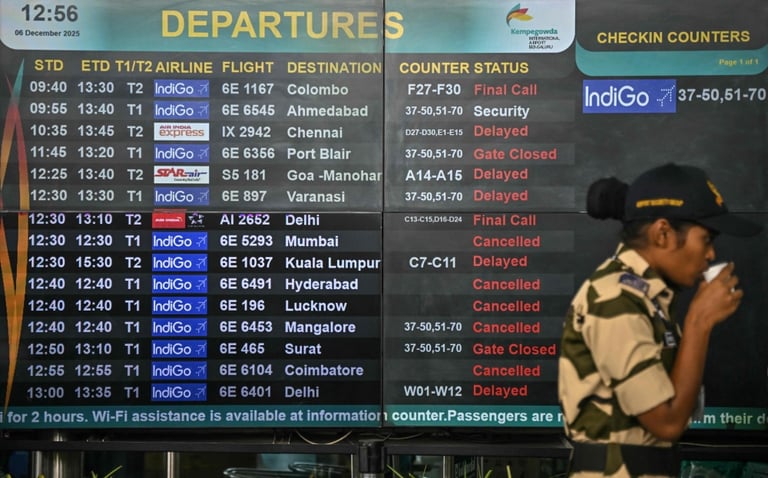
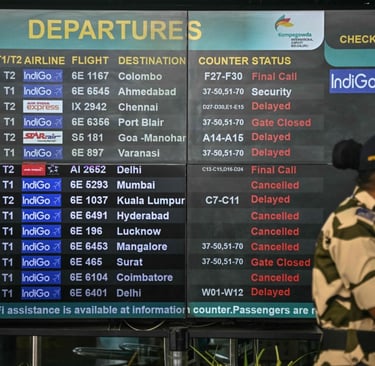
Then came the collapse. Early December 2025 saw a cascade of cancellations that spiraled into an operational meltdown. IndiGo went from canceling 150-200 flights per day to 550 cancellations on December 4 and over 400 on December 5. On some days, they had to cancel over half their daily flights.
Passengers were stranded at airports. People missed funerals, weddings, business meetings. At Delhi airport, passengers described the scenes as an "apocalypse". Aircraft positioned for evening flights had no crews because pilots had hit their duty limits. Evening flights fed the night network, so when evening flights got scrapped, the entire night network collapsed.
The system didn't degrade gracefully. It shattered.
When you're losing, you don't lecture about who "owns" the airline. You listen. You apologize sincerely. You fix it. Yet somewhere in IndiGo's internal crisis management response, an alleged email surfaced through anonymous whistleblower channels containing a line that, whether verified or not, became the symbol of everything passengers believed was wrong with the airline's leadership: "We can't let them think customers own the airlines."
We may never confirm if this email was real. But the fact that passengers and industry observers accepted it as plausible—that they believed it so readily it spread across social media and investor forums—reveals the true damage. IndiGo's credibility had eroded so completely that even an unverified quote felt true. This line captured everything wrong with IndiGo at that moment. The arrogance. The disconnect. The belief that optics mattered more than the anguish of a grandmother stuck at Mumbai airport, unable to reach her grandchild's birthday in Chennai. It wasn't "How do we fix this?" It was "How do we make sure we don't look weak?"
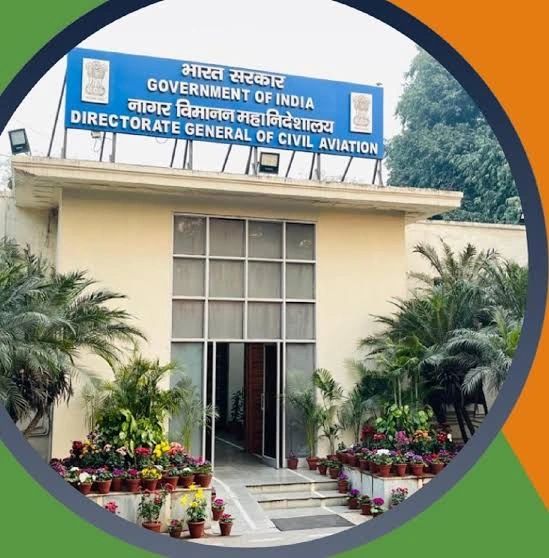
On December 8, 2025, the DGCA issued a show-cause notice to IndiGo's CEO and its Accountable Manager, demanding explanation for the "unprecedented disruptions". The regulator's language was damning:
"IndiGo did not make the necessary adjustments to its rosters, manpower and systems in time, resulting in widespread crew shortages and cascading operational breakdown".
Translation: This was IndiGo's fault. You had time. You didn't prepare.
On December 9, the government forced a 10% reduction in IndiGo's winter schedule—a punishment that compounded the financial hit. The airline that had prided itself on "never canceling flights" was now being forced to cancel them by the regulator itself.
Here's the tragic irony: All of this was happening precisely because IndiGo was pushing hard toward Vision 2030. The long-haul expansion, the Stretch product, the 30 A350-900s and 69 A321-XLRs—all of this required perfect domestic execution. You can't fly to London on a new wide-body if your domestic network is imploding. But the infrastructure they had built—the lean, maximally-optimized domestic operation—had no resilience. It had no buffer for unexpected regulatory changes or operational shocks. It was a Ferrari: blazing fast on the right track, but fragile everywhere else.
The challenges that had always lurked in Indian aviation—fuel taxes, currency depreciation, maintenance costs, airport congestion—had become irrelevant. The real crisis wasn't external. It was internal: a company that had confused operational efficiency with operational fragility. And now, as they face regulatory sanctions, passenger lawsuits, a plummeting brand reputation, and the prospect of slower growth, IndiGo's leadership finds itself in a position it had never imagined: defensive, chastened, and scrambling to rebuild trust.
The Vision 2030 whiteboard still hangs in the boardroom. But the path to it now runs through a minefield of reputational damage, regulatory distrust, and customer skepticism.
They have become what they once defeated: an airline in crisis.
The Matrix of failures
By December, the question was unavoidable: Should CEO Pieter Elbers resign?
Some analysts argue Elbers should resign. Not because he's incompetent—his crisis management at KLM proved he can navigate turbulence—but because trust, once shattered, requires new leadership to rebuild. IndiGo's brand was built on reliability. That trust didn't survive December 2025. A new CEO—unburdened by the baggage of ignored warnings and unassociated with the perception of tone-deaf responses—could reset the narrative. Elbers' remaining signals: "We made a mistake, we apologized, and we're moving on." That's not enough for an airline in reputational freefall.
Yet IndiGo's board has pushed back firmly. The airline denies reports that Elbers will be asked to resign. Multiple board members have argued that removing a globally experienced CEO over one operational lapse—however severe—is neither straightforward nor wise.
Their logic is compelling: Elbers has navigated multiple crises as CEO of KLM, managing complex international operations and regulatory challenges. Finding a replacement of comparable global stature for an airline of IndiGo's scale isn't simple. Removing him mid-crisis could signal panic to investors, employees, and customers. The errors, they argue, were systemic—rooted in airline-wide culture, not just one man's judgment. Stability, in their view, matters more than accountability theater.
This is where IndiGo's crisis becomes philosophically interesting. Does an airline need fresh leadership to rebuild trust? Or does it need experienced hands to navigate the storm?
The board believes the latter. Critics believe the former. And passengers—the ones who actually matter—are left wondering if either choice will restore what was lost: the simple belief that IndiGo will get them where they need to go.
The Crisis Management Mode
In the aftermath of December's collapse, IndiGo shifted into damage-control. The parent company appointed an external aviation expert for a root-cause analysis. Mr. Elbers appeared before the DGCA probe panel for questioning. The board activated a Crisis Management Group for stabilization. The airline complied with regulatory directives: a 10% flight cut and ₹500+ crore in travel vouchers.
These were necessary moves. Defensive moves. The minimum required to appease regulators. But they were not enough. Compliance is not recovery. What IndiGo still needs to do is far more ambitious.
Here are my 2 cents on what IndiGo needs to do immediately: Hire 900 pilots immediately at premium salaries (₹1+ crore per pilot if necessary). Pause Vision 2030—reschedule A350 deliveries to 2028-2029 and negotiate with Airbus. Abandon corporate apologies and commit to raw transparency: publish weekly on-time performance data, pilot hiring numbers, operational metrics. Go beyond refunds with genuine brand rehabilitation—partner with advocacy groups, sponsor affected families' trips, create accountability dashboards.
Most critically: accept that stability matters more than ambition right now.
The Financial Reality
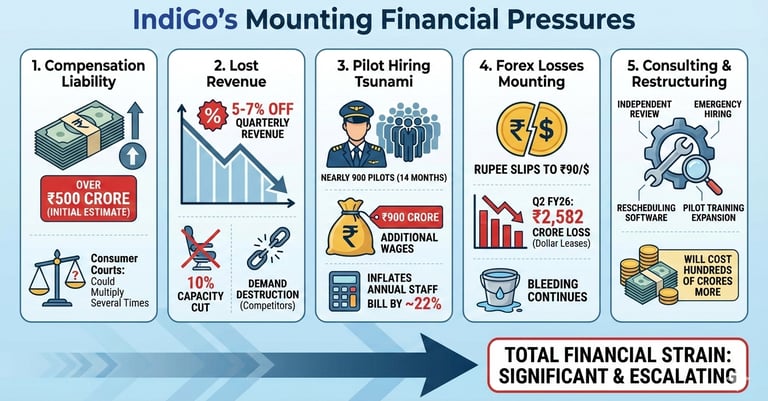
The numbers tell a grim story. Moody's estimates "significant financial damage" from the cancellation crisis. IndiGo has already refunded ₹827 crore in direct refunds. But the real bill is far steeper:
Compensation liability: Over ₹500 crore in compensation to stranded customers (and this is just the initial estimate; consumer courts could multiply this several times over).
Lost revenue: A 10% capacity cut mandated by the government, coupled with demand destruction (passengers now booking with competitors), could shave 5-7% off quarterly revenue.
Pilot hiring tsunami: IndiGo must hire nearly 900 pilots in the next 14 months. At ₹1 crore per pilot, this translates to ₹900 crore in additional wage costs, inflating its annual staff bill by nearly 22%.
Forex losses mounting: The rupee has slipped to ₹90 per dollar. IndiGo's Q2 FY26 saw a ₹2,582 crore forex loss due to dollar-denominated aircraft leases. This bleeding continues.
Consulting and restructuring: The independent board review, emergency hiring, rescheduling software, pilot training expansion—all will cost hundreds of crores more.
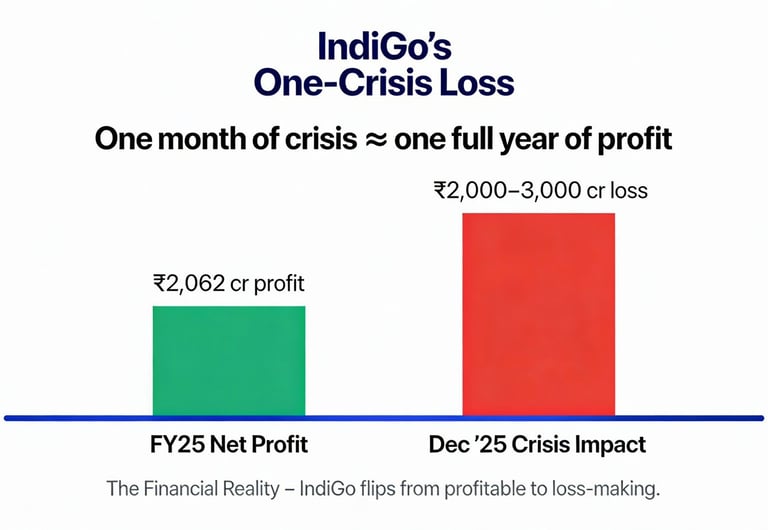
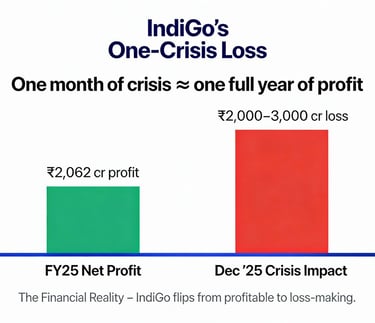
Analysts project IndiGo could lose ₹2,000-3,000 crore in FY26—transforming what was supposed to be a record-breaking year into a loss-making one. For context: IndiGo's entire net profit in FY25 was ₹2,062 crore. This single crisis could wipe out an entire year's earnings.
The Vision 2030 Paradox
Here's where the cruelty became obvious. Vision 2030—the $9-10 billion bet on A350-900s and A321-XLRs—was legally binding and financially non-negotiable. Yet executing this dream while the domestic foundation cracked was like building a skyscraper on quicksand.
International operations require trained crews, ground operations in 20+ countries, and premium-paying business travelers willing to trust IndiGo. But how many CFOs would approve travel on an airline that just stranded hundreds of thousands? How many executives would book a ₹1.5 lakh premium seat on a carrier that couldn't operate basic domestic flights reliably?
Vision 2030 wasn't just ambitious anymore. It was a liability—massive capital commitment draining resources needed to fix the immediate disaster.
Kingfisher couldn't afford to hire 900 pilots. Jet Airways couldn't afford to pause expansion. IndiGo can. But can it afford to swallow the narrative defeat? Can leadership accept that Vision 2030 was premature?
That's the real question. If IndiGo patches December and rushes back to expansion, it will have learned nothing. The next crisis won't be a stumble. It will be a fall.
Closing notes
Yet here's the thing: No one predicted Usain Bolt would break the world record on that particular day in Berlin.
No one woke up on August 16, 2009 and thought, "Today, a Jamaican sprinter will run 100 meters in 9.58 seconds and redefine human possibility". It wasn't planned. It wasn't inevitable. It happened because of preparation, timing, and forces beyond anyone's control aligning perfectly.
IndiGo's recovery won't follow a clean narrative arc either. Success in aviation isn't realized until it actually materializes. Will IndiGo fix its pilot rosters by February 2026? Maybe. Will customers forgive the December 2025 chaos? Unknown. Will Vision 2030 become reality or white-board fantasy? Time will tell.


What is certain: IndiGo is no longer the invincible juggernaut everyone believed it to be. It is a company that can fail—spectacularly, like Kingfisher and Jet Airways. The difference is that IndiGo still has the resources, the market share, and the brand foundation to recover if it acts with urgency and humility.
The Indian skies are watching. The regulatory authority is watching. And most importantly, the millions of passengers who placed their trust in a six-letter brand—who believed IndiGo would get them where they needed to go—are watching to see if this airline can recover its lost promise.
The next 12 months will define not just IndiGo's future, but whether their Blue Ocean Strategy can survive contact with reality.
Further Reading and References
Hey, thanks for reaching till this portion of the article. You are free to skip this section altogether (unless you are a geek like me!). Explore the concepts, events and themes that I have covered in the article here: LINK
Together, these resources provide a comprehensive foundation for analyzing not just what happened to IndiGo, but why—and what it means for the future of Indian aviation and global airline strategy. Feel free to connect with me if you need help in getting any of these resources. I can send them directly to you!